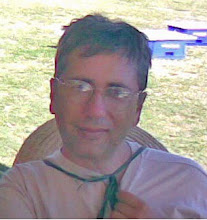
The street janitors of Koşuyolu are special. This attribute arises because of the structure of the vicinity which is mostly houses with small gardens and relatively large deserted streets. In fact, the janitors of all the vicinities in Istanbul are special.
I have always been amazed by the magic of the janitors since I was a small child. The first individuals that I had a chance to meet out of my family were the street janitor, the postman, the ‘simit’ seller and after that the ice cream seller… In distance the grocery shp owner, the butcher and others…
It was very difficult for me to depart from my mother for a whole day when I began to the primary School with out going to kindergarten first… It has been carefully noted in our family jargon that I had cried “I won’t ever go to school, I will become a janitor!” in response to my father’s military offcer smile mixed with a ‘shining golden tooth’ in it, which generally indicated an intrigue. As far as I could see At that moment, being a janitor was the closest job that I could perform closest to my father.
Being a janitor has its magic like any other job. A service job… Our vicinity’s janitors have always been people who clean up around silently, avoiding personal contact and they use to disappear in an unknown time as they appear… Carefully, they give succinct but not predominant answers when conversed…. What matters in their relation with the inhabitants of the street is the service.
I love to watch how the janitors perform their jobs since my chidhood… These ‘guys’ are masters of the ‘let it go’ philosophy. As you know, our people in Turkey are not brought up with personal discipline of cleanness yet, unfortunately. So, the janitors have a lot to do every day… I can observe that the janitors in Istanbul have it ‘ab die Nase – up tp their noses…’ The thing that most excites me is to watch how these heavily loaded janitors manage to confront this difficulty.
Working discipline, to protect their own health and patience, to preserve his energy for his family and the people themselves they serve… Choices between all these are reduced practically to choosing the various types of rubbish that lie on the side way or the street and sweep them into his handheld bucket with his room. Janitors are masters of ‘let it go’ or ‘may it stay’.
Sweetly… The janitor stands on the street with an inner peace, grace and confidence that mar s, if he leaves something on the street, he will find it somewhere close the next day.
Ali R+
April the 23rd 2008(Turkish Children’s Day), Koşuyolu
7 Mayıs 2008 Çarşamba
16 Şubat 2008 Cumartesi
THE ROLE OF TIMEFRAME IN DECISIONMAKING
What is the reason that makes a decision correct? It is first of all the availability of correct and sufficient information. “You should not have an opinion before you have sufficient information!” said Uğur MUMCU, a renown newspaper researcher-writer and assassin of fundemantalist activists. On the other hand, the governors of countries which have the largest information sources and means can and do make mistakes. There must be some other reasons…
What is the role of time in the correctness of the decision? Is being at the “Right time right place” enough? “Thinking in the speed of light” or “To understand papa before hearing the pa”, (“Leb demeden leblebiyi anlamak”, a Turkish addage) etc… Does thinking fast provide correctness to the decision or even contribute to it?
Is it good to make all decisions quickly? Is this approach that speed is more important than anything else as in the cowboy duels valid in all other cultures? Should it be valid? Does speed in the decision making process guarantee correctness?
There is also the case, in the Turkish culture where a village child, under the pressure of life, can not answer the question of a TV reporter because he is afraid of saying anything wrong… Maybe that is the reason our educators emphasize ‘make a decision as quick as possible and say something rather than remain silent’….
In fact, we can look from a view point so that these two vastly seperate examples can appear to be not so far. This point of view is not the speed of the decision making process but the time, the duration dedicated to making a decision.
The thing that determines the correctness of a decision is the timeframe dedicated to its formation and the chosen moment for its declaration. One should decide first when the decision should be taken in order to make the right decision. Then decide how long it should take, the timeframe necessary to make this decision. Determining the timeframe correctly and applying it give the result of a correct decision.
The processing of information in our brains does not happen in a moment… It takes time. Just try it when you can not remember something. Try to recall a few things related to the thing that you can not remember. The second or third degree things related to these… Leave some space in between and hesitate. You will remember the missing thing innately in a while…
The phenomena related to the decision while making it are processed in our mind or in the common wisdom similarly to the above. Phenomena trigger other phenomena that are semantically related to them. The depths reached by chain triggering or cascade connections increase according to the seriousness of the situation. Things that have to be accounted for must be kept in the working memory where they can easily be noticed. The solution of the problem may require obsession and concentration even focusing to the matter. While some of these effect the efficiency of processing, all of these happen and are controlled according to the sense of time provided by the timeframe.
The timeframe, namely the duration and the deadline to make a decision is a unique subsistance for making the right decision. If you do not put in enough time you may miss all the phenomenons related to the subject. You may miss the chains of phenomena related to each other, the cause and result relations… You may make decision quickly and easily because your working memory is not overloaded. This gives you the possibility to handle more difficult decisions to come.
If you dedicate more than necessary time to decision making, you may get lost in apparently related but not vital details and get drowned in depths. Your working memory gets overloaded, you may lose the freshness necessary to make healthy decisions. Obsession, concentration and focusing becomes an open-end purpose in themselves when they are not directed to a substantial aim and may damage your personal health permanently.
Determining the right moment and the timeframe to make a decision provides correctness. This is difficult to apply in actual life ofcourse… For ex. in the emergency intervention of some cases, is the timeframe shorter than duration necessary for choosing the right option.
The doctor that intervenes to an emergency situation is forced to choose at least ONE of the available options rather than the best one of the available ones. It is not more important to find the best choice than applying at least one choice as quick as possible to give the patient a chance to live… The timeframe alone determines the correctness of the decision in emergency conditions.
The statesmen are sometimes in a similar situation when the necessary timeframe is much longer than available time to make a decision… They can not wait and see the preliminary results of their decisions and apply recursion to correct them, which may take quiet sometime in social matters.
It is not a surprise good politicians have fortitude and clairvoyance.
If carefully studied, one can observe that Einstein’s proof of Newton’s mechanical movement law is wrong in speeds close to the light’s, is based on looking at the phenomenon from a different point of observation, namely the timeframe that movements take place.
Timeframe determines correctness of the decision.
Ali R+ SARAL
What is the role of time in the correctness of the decision? Is being at the “Right time right place” enough? “Thinking in the speed of light” or “To understand papa before hearing the pa”, (“Leb demeden leblebiyi anlamak”, a Turkish addage) etc… Does thinking fast provide correctness to the decision or even contribute to it?
Is it good to make all decisions quickly? Is this approach that speed is more important than anything else as in the cowboy duels valid in all other cultures? Should it be valid? Does speed in the decision making process guarantee correctness?
There is also the case, in the Turkish culture where a village child, under the pressure of life, can not answer the question of a TV reporter because he is afraid of saying anything wrong… Maybe that is the reason our educators emphasize ‘make a decision as quick as possible and say something rather than remain silent’….
In fact, we can look from a view point so that these two vastly seperate examples can appear to be not so far. This point of view is not the speed of the decision making process but the time, the duration dedicated to making a decision.
The thing that determines the correctness of a decision is the timeframe dedicated to its formation and the chosen moment for its declaration. One should decide first when the decision should be taken in order to make the right decision. Then decide how long it should take, the timeframe necessary to make this decision. Determining the timeframe correctly and applying it give the result of a correct decision.
The processing of information in our brains does not happen in a moment… It takes time. Just try it when you can not remember something. Try to recall a few things related to the thing that you can not remember. The second or third degree things related to these… Leave some space in between and hesitate. You will remember the missing thing innately in a while…
The phenomena related to the decision while making it are processed in our mind or in the common wisdom similarly to the above. Phenomena trigger other phenomena that are semantically related to them. The depths reached by chain triggering or cascade connections increase according to the seriousness of the situation. Things that have to be accounted for must be kept in the working memory where they can easily be noticed. The solution of the problem may require obsession and concentration even focusing to the matter. While some of these effect the efficiency of processing, all of these happen and are controlled according to the sense of time provided by the timeframe.
The timeframe, namely the duration and the deadline to make a decision is a unique subsistance for making the right decision. If you do not put in enough time you may miss all the phenomenons related to the subject. You may miss the chains of phenomena related to each other, the cause and result relations… You may make decision quickly and easily because your working memory is not overloaded. This gives you the possibility to handle more difficult decisions to come.
If you dedicate more than necessary time to decision making, you may get lost in apparently related but not vital details and get drowned in depths. Your working memory gets overloaded, you may lose the freshness necessary to make healthy decisions. Obsession, concentration and focusing becomes an open-end purpose in themselves when they are not directed to a substantial aim and may damage your personal health permanently.
Determining the right moment and the timeframe to make a decision provides correctness. This is difficult to apply in actual life ofcourse… For ex. in the emergency intervention of some cases, is the timeframe shorter than duration necessary for choosing the right option.
The doctor that intervenes to an emergency situation is forced to choose at least ONE of the available options rather than the best one of the available ones. It is not more important to find the best choice than applying at least one choice as quick as possible to give the patient a chance to live… The timeframe alone determines the correctness of the decision in emergency conditions.
The statesmen are sometimes in a similar situation when the necessary timeframe is much longer than available time to make a decision… They can not wait and see the preliminary results of their decisions and apply recursion to correct them, which may take quiet sometime in social matters.
It is not a surprise good politicians have fortitude and clairvoyance.
If carefully studied, one can observe that Einstein’s proof of Newton’s mechanical movement law is wrong in speeds close to the light’s, is based on looking at the phenomenon from a different point of observation, namely the timeframe that movements take place.
Timeframe determines correctness of the decision.
Ali R+ SARAL


TRIGGING MECHANISMS IN DECISION MAKING
Abstract: CHRISTOPHER D. WICKENS has written an article titled ‘Multiple resources and performance prediction’ at University of Illinois at Urbana-Champaign, Institute of Aviation Willard Airport, Aviation Human Factors Division, Aviation Research Laboratory. This article proposes a model to predict human performance under conditions that require multiple mental resources. I will make use of the information provided in Wickens’s article to point at the importance of trigging in human cognition.
To my fellow Turkish aviator Mr. Servet BAŞOL,
A trigger is a simple, high “affordance”, easy to use mechanism. You should not think elaborate things to make it work. Its implementation should be independent from the logic of the system it starts. Starting the system must be totally insulated from the decision making. It should work as simple as a Texas cowboy firing his gun.
Our brain does multiprocessing, multitasking and distributed processing. We can talk and walk at the same time. We can talk to two different persons on different subjects in the same time interval. MRI pictures show that different parts of our brains get activated for different types of tasks. We perform these tasks using various resources of our minds.
“The multiple resource model proposes that there are four important categorical and dichotomous dimensions that account for variance in time-sharing performance. That is, each dimension has two discrete 'levels'. All other things being equal (i.e. equal resource demand or single task difficulty), two tasks that both demand one level of a given dimension (e.g. two tasks demanding visual perception) will interfere with each other more than two tasks that demand separate levels on the dimension (e.g. one visual, one auditory task). The four dimensions, shown schematically in figure 1, and described in greater detail in the following pages, are processing stages, perceptual modalities, visual channels, and processing codes. Consistent with the theoretical context of multiple resources, all of these dichotomies can be associated with distinct physiological mechanisms.”

Wickens’s model has been supported by many MRI works that study the brain locations activated by specific tasks. Unfortunately many mental tasks are complex. For ex. speech activates many parts of the brain at the same time. This makes it extremely difficult to drive some generalizations in regards to the character of these activated brain locations. Simply it is difficult to claim that there are simple, straight forward, seperate, ‘processors’ or even ‘centers’. Wickens’s aproach and ‘resources’ model serves its purpose without making unproved generalisations.
But, Wickens also states: “In employing multiple resource theory to guide such dichotomous categorical design decisions, it is of course important to bear in mind the other consequences of switching from one resource category to another, such as, for example, the fact that a visual-spatial map may be a more compatible means of delivering geographical information than via words.” Wickens’s statement points at the overload that arises because of changing the modality during task performance, namely driving a car and navigating at the same time. Wickens clearly assumes the existence of some sort of a trigging mechanism, which triggers an other modality with some mental performance cost.
Today, we certainly know that there are many neural networks in our brains. There are also connections between dedicated neural networks. My point is: Wickens’s ‘resources’ are triggable with some sort of trigging mechanisms, possibly hard and/or soft. Moreover believes this humble dreamer, mental triggers are ubiquitous. We can observe them beginning from low level physiological structures going up to skills, hobbies, professions, habits.
Trigging mechanisms can be built in many different ways. Seeing objects, images trigger our brain’s visual resources, hearing sounds triggers hearing resources… Visual and acoustic signals are recieved by different organs and this provides a hardware connection and filtering mechanism.
But it is not that simple. The sound and visual signals also have different data characteristics. The frequency bands for sound and image are different. It is not only the organs and physical connections that triggers our brain’s visual and acoustic centers but also the character, the format of the sound and the image signals.
It is amazing, how brain transforms and processes signals of different modalities such as sound and image. The signals loss their perception formats when they are taken into the working memory as semantic chunks… How does the central processor decide which processor to trig for which signal then?
There must be some encoding algoritm, maybe only the amount of data or the SPEED. The way the data is provided and processed could trigger the related processor. A neural network could simply work as an RC filter circuit besides its logical function and filter acoustic or visual signals as high or low pass filters, maybe.
Within a certain modality, content adrressing triggers related items at different semantic levels. For ex., when you see me, it triggers your previous impressions about me.
Trigging does not function linearly either. Same events do not trigger same reactions in our brain under all conditions. Anticipation, priming, mood, motivation, context and memory usage affects trigging mechanisms of our brain.
My second point is: Trigging is a vital element of our mental life both socially and individually… Sadly trigging can be used by people with bad intentions such as the assassination in the beginning of the first WW. On the other hand it is a rich human resource that can not be overused. Emergency psychology, decision making under stress, large systems, aviation, air traffic control have many applications for it. Slow progressing processes such as education, politics etc. also…
A trigger mechanism reduces flexibility but increases automacity when designed correctly. It brings a level of abstraction. There are different types of mental triggers: For remembering things, you could say ‘I will remember this tonight’, or ‘I will wake up 6 O’Clock in the morning’, ‘I will stop thinking about my job when I come to the stairs of my house, till I begin to drink my coffee after my dinner, I may remember it if necessary’…
It looks like the religious commitments that one makes before fasting etc…
Reaction triggers could be ‘I will push the brake to the bottom when it is inevitable’, but this should rather be a warmth in your right leg muscle rather than words… Sports is all about doing the right triggering.
Finally, cognition, a healthy mental life requires the development and maintenance of personal triggering mechanisms. Emergency processing, analysis, smalltalk, imagination, design, planning, mindfullness, high concentration, high concentration long duration working, recovering emotions after heavy cognitive work… Staying healthy as a successful professional requires maintenance and enhancement of your mental triggering processes so that you sustain your well-being.
To my fellow Turkish aviator Mr. Servet BAŞOL,
A trigger is a simple, high “affordance”, easy to use mechanism. You should not think elaborate things to make it work. Its implementation should be independent from the logic of the system it starts. Starting the system must be totally insulated from the decision making. It should work as simple as a Texas cowboy firing his gun.
Our brain does multiprocessing, multitasking and distributed processing. We can talk and walk at the same time. We can talk to two different persons on different subjects in the same time interval. MRI pictures show that different parts of our brains get activated for different types of tasks. We perform these tasks using various resources of our minds.
“The multiple resource model proposes that there are four important categorical and dichotomous dimensions that account for variance in time-sharing performance. That is, each dimension has two discrete 'levels'. All other things being equal (i.e. equal resource demand or single task difficulty), two tasks that both demand one level of a given dimension (e.g. two tasks demanding visual perception) will interfere with each other more than two tasks that demand separate levels on the dimension (e.g. one visual, one auditory task). The four dimensions, shown schematically in figure 1, and described in greater detail in the following pages, are processing stages, perceptual modalities, visual channels, and processing codes. Consistent with the theoretical context of multiple resources, all of these dichotomies can be associated with distinct physiological mechanisms.”
Wickens’s model has been supported by many MRI works that study the brain locations activated by specific tasks. Unfortunately many mental tasks are complex. For ex. speech activates many parts of the brain at the same time. This makes it extremely difficult to drive some generalizations in regards to the character of these activated brain locations. Simply it is difficult to claim that there are simple, straight forward, seperate, ‘processors’ or even ‘centers’. Wickens’s aproach and ‘resources’ model serves its purpose without making unproved generalisations.
But, Wickens also states: “In employing multiple resource theory to guide such dichotomous categorical design decisions, it is of course important to bear in mind the other consequences of switching from one resource category to another, such as, for example, the fact that a visual-spatial map may be a more compatible means of delivering geographical information than via words.” Wickens’s statement points at the overload that arises because of changing the modality during task performance, namely driving a car and navigating at the same time. Wickens clearly assumes the existence of some sort of a trigging mechanism, which triggers an other modality with some mental performance cost.
Today, we certainly know that there are many neural networks in our brains. There are also connections between dedicated neural networks. My point is: Wickens’s ‘resources’ are triggable with some sort of trigging mechanisms, possibly hard and/or soft. Moreover believes this humble dreamer, mental triggers are ubiquitous. We can observe them beginning from low level physiological structures going up to skills, hobbies, professions, habits.
Trigging mechanisms can be built in many different ways. Seeing objects, images trigger our brain’s visual resources, hearing sounds triggers hearing resources… Visual and acoustic signals are recieved by different organs and this provides a hardware connection and filtering mechanism.
But it is not that simple. The sound and visual signals also have different data characteristics. The frequency bands for sound and image are different. It is not only the organs and physical connections that triggers our brain’s visual and acoustic centers but also the character, the format of the sound and the image signals.
It is amazing, how brain transforms and processes signals of different modalities such as sound and image. The signals loss their perception formats when they are taken into the working memory as semantic chunks… How does the central processor decide which processor to trig for which signal then?
There must be some encoding algoritm, maybe only the amount of data or the SPEED. The way the data is provided and processed could trigger the related processor. A neural network could simply work as an RC filter circuit besides its logical function and filter acoustic or visual signals as high or low pass filters, maybe.
Within a certain modality, content adrressing triggers related items at different semantic levels. For ex., when you see me, it triggers your previous impressions about me.
Trigging does not function linearly either. Same events do not trigger same reactions in our brain under all conditions. Anticipation, priming, mood, motivation, context and memory usage affects trigging mechanisms of our brain.
My second point is: Trigging is a vital element of our mental life both socially and individually… Sadly trigging can be used by people with bad intentions such as the assassination in the beginning of the first WW. On the other hand it is a rich human resource that can not be overused. Emergency psychology, decision making under stress, large systems, aviation, air traffic control have many applications for it. Slow progressing processes such as education, politics etc. also…
A trigger mechanism reduces flexibility but increases automacity when designed correctly. It brings a level of abstraction. There are different types of mental triggers: For remembering things, you could say ‘I will remember this tonight’, or ‘I will wake up 6 O’Clock in the morning’, ‘I will stop thinking about my job when I come to the stairs of my house, till I begin to drink my coffee after my dinner, I may remember it if necessary’…
It looks like the religious commitments that one makes before fasting etc…
Reaction triggers could be ‘I will push the brake to the bottom when it is inevitable’, but this should rather be a warmth in your right leg muscle rather than words… Sports is all about doing the right triggering.
Finally, cognition, a healthy mental life requires the development and maintenance of personal triggering mechanisms. Emergency processing, analysis, smalltalk, imagination, design, planning, mindfullness, high concentration, high concentration long duration working, recovering emotions after heavy cognitive work… Staying healthy as a successful professional requires maintenance and enhancement of your mental triggering processes so that you sustain your well-being.
TRIGGERS
Nobody needs to think what to do with a hammer. Hammer’s form indicates its function. This is called affordance. Trigger is the same as hammer in this sense. A person who sees a gun understands immediately that he has to pull the trigger to fire. Trigger’s affordance is also high similar to hammer.
Imagine all the weapons or devices that begin to work by a single signal. A shotgun, a pistol, a hair dryer, an automobile, a computer and any device that has an open button… All of these have a button, switch etc. a mechanism that makes a device work, namely a trigger. Even a baby recognizes that she has to push a button to make something work. They usually make a game out of it though…
Trigger is very simple and compact. Its purpose is without any hesitation crystal clear. Its physical appearence, colour and purpose are easily percievable. If the mechanism that the trigger trigs is related to human life, these attributes are even more clear.
From the point of design should the trig mechanism not bear any cognitive function. The action of pulling the trigger should not involve any thinking. The safety mechanism of a gun requires the user to evaluate the situation. After the safety mechanism is released, pulling the trigger and trigging the gun to fire should be extremely easily.
A good trigger should enable its user to react immediately and as required. The Trigger should not have any evaluation, judging or logical ability. Trigger should immediately do what it is required to .
If abstracted, may these attributes of trig be applied to other mechanisms that start systems. For ex., the decision making techniques that we use under emergency conditions, which are very simple and results oriented.
When reacting to a person dying in an emergency room, it is not more important to decide which one is the most appropriate among the 2-3 available options than to apply one of them as quick as possible to give the patient at least some chance of survival… It is a ‘trigger’ that controls the behaviour of the doctor at that moment, a ‘trigger’ formed previously by his education and experience. It is vital to pull the trigger at that moment more than anything else, just like a Texas cowboy…
If we generalize a little bit, trigging is done after an algorithm, a logic, a decision making process. A good trig should be independent from this mechanism. You must first decide to shoot and after that pull the trig and shoot. The total duration to do this is yor response time infront of the threat directed to you. An other article of mine on how you can minimize this duration and the mental substructure of trigers will be available at http://largesystems-atc.blogspot.com in a short while….
It is possible to observe the existance of trigging mechanisms in every decision making process. To make a decision requires the evaluation of the available data and reaching a resolution at the end of this process. Reaching a resolution is the result of a TRIGGER mechanism. Large systems, pilots, air traffic controllers, firefighters, soldiers, doctors and other emergency personnel have to make decisions under stress. It is vital to have developed and prepared the correct TRIGGER mechanisms in these situations… The responsibility of the training and support for the mental health of these professions is yet to be resumed completely even by the European authorities.
Trigging mechanisms are subsistent for our minds in the daily life… The trig should be attached to a condition. Such as ‘I will wake up at 6 O’Clock in the morning’ or, ‘I will forget everything related to the job at the entrance stairs of my Home, till I drink my coffee after the dinner and relax when it may come back if necessary…’ As it is called ‘Niyet ettim …yapmağa’ (‘I commit myself to do…’) in religious commitments.
Even though trig may be considered trivial at the first glance, it is something used unconsciously in the human nature, a vital instrument in our interaction with the subconscious and our automatic processes… Wrong triggings may include suicides, deadly crimes and may cause unreversable loses and damage even in the social relations as seen in the assassination event at the beginning of the first World War.
Triggers are subsistent and indispensable. Trigger mechanisms are part of our natural beings as well as nature’s. Human mind and brain and also social and economical events, overall the nature of matter sustains trigger’s abundance. As the son of a commando training officer who trained many ‘trig like’ (interalia) brave soldiers and, in the warm memories of what he chose to teach us; my wish from you and advise is; the person who has read this short article till its end can do much more than a simple trigger can and, I believe, you should.
Kind regards.
Ali R+ SARAL
Imagine all the weapons or devices that begin to work by a single signal. A shotgun, a pistol, a hair dryer, an automobile, a computer and any device that has an open button… All of these have a button, switch etc. a mechanism that makes a device work, namely a trigger. Even a baby recognizes that she has to push a button to make something work. They usually make a game out of it though…
Trigger is very simple and compact. Its purpose is without any hesitation crystal clear. Its physical appearence, colour and purpose are easily percievable. If the mechanism that the trigger trigs is related to human life, these attributes are even more clear.
From the point of design should the trig mechanism not bear any cognitive function. The action of pulling the trigger should not involve any thinking. The safety mechanism of a gun requires the user to evaluate the situation. After the safety mechanism is released, pulling the trigger and trigging the gun to fire should be extremely easily.
A good trigger should enable its user to react immediately and as required. The Trigger should not have any evaluation, judging or logical ability. Trigger should immediately do what it is required to .
If abstracted, may these attributes of trig be applied to other mechanisms that start systems. For ex., the decision making techniques that we use under emergency conditions, which are very simple and results oriented.
When reacting to a person dying in an emergency room, it is not more important to decide which one is the most appropriate among the 2-3 available options than to apply one of them as quick as possible to give the patient at least some chance of survival… It is a ‘trigger’ that controls the behaviour of the doctor at that moment, a ‘trigger’ formed previously by his education and experience. It is vital to pull the trigger at that moment more than anything else, just like a Texas cowboy…
If we generalize a little bit, trigging is done after an algorithm, a logic, a decision making process. A good trig should be independent from this mechanism. You must first decide to shoot and after that pull the trig and shoot. The total duration to do this is yor response time infront of the threat directed to you. An other article of mine on how you can minimize this duration and the mental substructure of trigers will be available at http://largesystems-atc.blogspot.com in a short while….
It is possible to observe the existance of trigging mechanisms in every decision making process. To make a decision requires the evaluation of the available data and reaching a resolution at the end of this process. Reaching a resolution is the result of a TRIGGER mechanism. Large systems, pilots, air traffic controllers, firefighters, soldiers, doctors and other emergency personnel have to make decisions under stress. It is vital to have developed and prepared the correct TRIGGER mechanisms in these situations… The responsibility of the training and support for the mental health of these professions is yet to be resumed completely even by the European authorities.
Trigging mechanisms are subsistent for our minds in the daily life… The trig should be attached to a condition. Such as ‘I will wake up at 6 O’Clock in the morning’ or, ‘I will forget everything related to the job at the entrance stairs of my Home, till I drink my coffee after the dinner and relax when it may come back if necessary…’ As it is called ‘Niyet ettim …yapmağa’ (‘I commit myself to do…’) in religious commitments.
Even though trig may be considered trivial at the first glance, it is something used unconsciously in the human nature, a vital instrument in our interaction with the subconscious and our automatic processes… Wrong triggings may include suicides, deadly crimes and may cause unreversable loses and damage even in the social relations as seen in the assassination event at the beginning of the first World War.
Triggers are subsistent and indispensable. Trigger mechanisms are part of our natural beings as well as nature’s. Human mind and brain and also social and economical events, overall the nature of matter sustains trigger’s abundance. As the son of a commando training officer who trained many ‘trig like’ (interalia) brave soldiers and, in the warm memories of what he chose to teach us; my wish from you and advise is; the person who has read this short article till its end can do much more than a simple trigger can and, I believe, you should.
Kind regards.
Ali R+ SARAL
24 Ocak 2008 Perşembe
THE FEAR OF DARKNESS IN MY CHILDHOOD
 Peisaj [5]
I was three or four years old. My ‘baba’ (papa) was a military chief at Mardin Nusaybin (Syria border, southeast Turkey). Our Home was the only one built with cement in Nusaybin. It was located outside the village at the top of a small hill. Nusaybin did not have electricity at that time. My mother was a little bit nervous because of my father’s duties. My ‘baba’ had to go out to catch smugglers at nights. A deep darkness would sink over our Home those times… Sometimes would burials take place in the cemetery at distance right in front of our Home… Night burials, according to the local customs. I used to watch them secretly my hair rising… The groups walking in the darkness, candle lights, the dead being carried lying over ladders… Not really understanding what was going on…
Six months later my mother’s efforts succeeded. My father gave up his carrier. He applied for his well deserved retirement. We bought a new house at one of the then suburps of Istanbul. Our new Home had a large garden. We used to have nice evenings at the front-garden in hot summer nights. I remember, every now and then, my father used to send me to the back-garden to fetch some stuff during these night leisures. I was ‘damn’ afraid of going to the back-garden in darkness. Everybody would burst out into laughter and make fun of the situation rather than me and we would have a sweet time in the family about a small secret that belonged to us all.
Although the fear of darkness in my childhood decreased gradually, it followed me for many years. It transformed into a sensitivity and sense of prudence through time. I wonder, if I had not lived the experiences in Nusaybin at the ages of three to four, would I have a fear of darkness? I do not think so. I would not… Nevertheless, many people get nervous about darkness or fear from it. For many justifiable reasons.
OK then, what is the thing that makes darkness such a source of fear? Why is darkness fearsome? Is darkness the fearsome thing itself or is it something in ourselves that makes us afraid?
Is this secret thing located there in the darkness or is it somewhere else? Really, why do we think that something we can not see is located in the darkness, rather than somewhere else for example under the street lamp?
The reason that makes us nervous about darkness is it is not something we could hold in our hands, it is not an absolute object. Just like time… Difficult to understand… Specially difficult for people younger than age 16, who has not developed a concept about abstraction, yet. Darkness is not an object like a door, a table or a wall. Maybe it is rather something like tiredness or sadness…
Its opposite enlightenedness (aydınlık, tr) is rather like happiness, joy… In short is darkness a situation and a mood rather than an object.
Darkness is both a phsical situation and our perception of it. If sunlight falls on the furniture in our house our Home is ‘enlightened(aydınlık, tr)’. The sun light beams that are reflected from the furniture reach our eyes with enough intensity. But in the evening, the intensity of the sun light decreases. First, some colors begin to lose their liveliness and begin to appear as a shade of grey. Then, they become grey in semi-darkness and disappear in the darkness.
Our interaction with darkness in our modern lives is not the same as in the nature. We move from darkness to light and vice versa suddenly during our daily lives for many times. For example, when the child wishes ‘good night’ and goes to her room she has to go into darkness first and then open the light suddenly and then close it again… Or, when you are driving at night, the cars approaching from the other side of the road dazzle your eyes frequently.
Car, airplane or any vehicle drivers abide the night vision priciples. Airplane pilots’ night flying techniques include a different vision technique. “In daylight you have to look directly at the target object. At night, you have to look at slightly one side of the target object. Scanning the target by moving your eye permits “off-center” viewing. You should not look directly at the target object at night unless there is a special reason.”
“The explanation for this lies in the DUAL STRUCTURE OF OUR EYE’[4]. The cones work in day light and the rods at night. The rods are located on the periphary of a circle around the cones.
The cones need a greater intensity of light to function, and stop working in semidarkness.
The rods can function in 1 / 5000 th of light intensity. The cones are 100000 times sensitive in dark as they are in light. So, they work at night.”
The problem is; what do the rods do in the day light? The rods provide a grey scale view, while cones provide coloured… Rods lose their sensitivity after short exposure to light. This means less sensitivity is used only for percieving objects in the peripheral view…
In short, seeing is not as simple as we naturally presume. Our ability to see changes at different levels of light intensity… We can not see with the same quality in all conditions. Our ability to see in darkness is much less than in sun light. If explored, we can easily find that our seeing ability is not limited by only the availability of the sunlight. We have other limits also… The views of fast moving seperate things appear to us as if belonging to a single thing moving continuously, for example.
Seeing is not limited with the functions of the eye of course… Our brain first percieves then understands the things that our eyes see. We also have some limits in our brain’s visual perception naturally… We can not percieve the second event if two events happen too quick sequentially… They call this perceptional blink sometimes…
Our seeing abilities, given by the Creator, require a period of adaptation when the conditions of the environment change, the environment that we are temporarily in. When we move into darkness
suddenly, the rod cells in our eyes need some time to get activated. At these instances, give yourself sometime for your brain to get healthy-correct information from your eyes.
During the flow of times, we all experience sudden changes of things we are used to. The problem is not only the change in the conditions that we are accustomed to but also the fact that we, ouselves change. Whether we notice it or not, the way our body and mind work, changes according to the conditions that we are in. A small kid gets red spots on his skin suddenly, a software engineer approaches the end of his project, a pilot lands with his co-pilot in bad climate conditions, or an air traffic controller whose job is to keep airplanes apart from each other loses his radar system which enables him to see the skies…
When you fall into sudden darkness, I believe, there may be a few tricks that you may learn and borrow from an air traffic controller who has lost the view of airplanes on his radar. He at least has strips of papers in his hand that shows the locations and directions of his resumed airplanes... If the lights go off when you are on the stairway, you should have kept certain reference points in your mind beforehand, such as the location of the handrail, your relative position in the current floor stairs…
Darkness is not an object to be afraid of, it is a sitaution, a mental mood. To cope with darkness, you should have reference points that You have created before. We can not control everything in our lives but ‘knowing ourselves’ could make us stronger against the difficulties, at least.
Ali Riza SARAL
Note: The inspirational bases of this article lie in:
1. NIGHT VISION: A PEDAGOGICAL METAPHOR FOR AVIATION
http://largesystems-atc.blogspot.com/2008/01/night-vision-pedagogical-metaphor-for.html
2. Chip HEATH and Dan HEATH, MADE TO STICK – “the curse of knowledge”
3. HOW TO BE A DAMN SEXY MAN– “let the kids turn the page”
http://kristenbrookebeck.blogspot.com/2008/01/how-to-be-damn-sexy-man.html
4. AVIATION MEDICINE, Night Flight, http://www.pilotfriend.com/aeromed/medical/night_vision.htm
Helicopter Flight, http://meanwhile.com/?domain=helicfi.com
5. Bogdan GAVRUS, Peisaj, http://gavrusphoto.blogspot.com/
7 Ocak 2008 Pazartesi
NIGHT VISION: A PEDAGOGICAL METAPHOR for AVIATION
 Vizual [0]
‘Autokinesis’ is a special visual hazard of night flying. When you look constantly at a small point in a dark night, you feel as if the light is moving, after a while. Otherwise, you may feel as if yourself is moving.
‘Autokinesis’ is only one of the discrepancies that we carry everyday without ever being aware of. Our discrepancies may appear not only at the edges of our abilities, such as night vision, but also in our routine daily activities. The sooner we get aware of them, the better the quality and fulfillment of our lives.
Unfortunately, we are created not to improve our abilities but primarily, to survive with them.
In any form of life comes improvement after survival. Our bodies, namely the embodiment of ourselves [1] is designed so that even if we loss some part of us we should survive.
Even if we lose an arm, after feeling the immediate shock, we should be able to continue our lives, together with a prosthetic device, and even feel as if we still have the lost arm in our minds as in some cases[2]…
I believe, a mental, behavioural discrepancy can and may become a part of ourselves, and our mental embodiment similar to a prosthestic device… A discrepancy may become part of our ‘subjective’ mental body till something happens and brings our attention to it, thus this discrepancy becomes our ‘objective’ mental body.
The problem is that, the transition from the subjective mental body to the objective one may cause pain and also damage the complex relations of choices a person has made to build his/her personality.
“In cognitive linguistics, conceptual metaphor refers to the understanding of one idea, or conceptual domain in terms of another, for example, understanding quantity in terms of directionality (e.g. "prices are rising"). “ [4] Using metaphors in psychological training of air traffic controllers, engineers and other aviation personnel, could be an effective pedagogical approach. Rather than doing not much while waiting for who is going to fall down…
If we return back to the night vision; ‘night flying requires a different visual technique than day flying’ [5]. In daylight you have to look directly at the target object. At night, you have to look at slightly one side of the target object. Scanning the target by moving your eye permits “off-center” viewing. You should not look directly at the target object at night unless there is a special reason.
‘The explanation for this lies in the DUAL STRUCTURE OF OUR EYE’[5]. The cones work in day light and the rods at night. The rods are located on the periphary of a circle around the cones.
The cones need a greater intensity of light to function, and stop working in semidarkness.
The rods can function in 1 / 5000 th of light intensity. The rods are 100000 times sensitive in dark as they are in light. So, they work at night.
The problem is; what do the rods do in the day light? The rods provide a grey scale view, while cones provide coloured… Rods lose their sensitivity after short exposure to light. This means less sensitivity is used only for percieving objects in the peripheral view…
My point is, the night vision metaphor may be used for teaching Obsessive Compulsive Disorder (OCD) awareness for aviators. OCD is a common problem among people working with risk.
It may be just a behavioural nuisance that can not be noticed or an increasing mental risk towards more serious situations. You have to be aware of what the people around you are doing, in order to warn them and not get affected by them.
Henry Szechtman and Erik Woody ‘s article “Obsessive-Compulsive Disorder as a Disturbance of Security Motivation” describes OCD as:
“We hypothesize that the symptoms of obsessive-compulsive disorder (OCD), despite their apparent non-rationality, have what might be termed an “epistemic” origin – that is, they stem from an inability to generate the normal “feeling of knowing” that would otherwise signal task completion and terminate the expression of a security motivational system.[7]”
Similar to the Night Vision mechanism of the eye, Security Motivation System is ‘hardwired’. It is highly tuned to certain kinds of input like the cones and rods working on different light intensities.
Probably much more complex than eye’s night vision mechanism, is the Security Motivation System also “automatic and autonomous, and “encapsulated,” or relatively isolated from information developed by other systems.”
The Night Vision metaphor provides a good example for teaching:
1. There are seperate resources in our mind and brain for different tasks.
2. There has to be an activation and stopping mechanism (homeostatic) for any resource.
3. There may be a switching mechanism which manages the processes related to different and competing tasks.
Moods, emotions, thinking speed in different situations may effect the switching mechanism and activation – deactivation mechanism of our minds and brains[8]. Selecting the right mood and time frame helps the team make the right decisions with the right mental resources.
Ali Riza SARAL
[1] “Phenomenological theorists distinguish between the subjective body(as lived and experienced) and the objective body (as observed and scientifically investigated). My lived body is an EMBODIED CONSCIOUSNESS which fluidly and pre-reflectively engages the world. As we engage in our daily activities, we tend not to be conscious of our bodies and we take them granted – body that is passed-by-in-silence (Jean-Paul SARTRE, 1943, Being and Nothingness)”.
[2] “Prothestic devices stretch the boundaries of the body. They create a continuity beyond the limits of the skin”(Carolien HERMANS, 2002, Embodiment: the flesh and bones of my body). “A body schema works on a subconscious level. It registers shape and posture of the body(without coming to awareness). It makes a record of the momentary relative disposition of one’s own body parts”. “Prothestic devices can be absorbed in the body schema. Just as a hammer in the carpenter’s hand is incorporated into his body schema, any virtual body part or interface(keyboard, mouse, joystick) can become part of the schema in a temporary or longlasting way…”
[3] For further reading: Embodiment and Man-Machine Interaction
http://largesystems-atc.blogspot.com/2007/07/embodiment-and-man-machine-interaction.html
[4] Wikipedia, http://en.wikipedia.org/wiki/Conceptual_metaphor
[5] “Night flying requires a different visual technique than day flying. You can see an object best during daylight by looking directly at it. At night, however, a scanning procedure is more effective - to permit "off center" viewing of the target. In other the words, you will find after some practice that you can see things more clearly and definitely at night by looking slightly to one side of them, rather than straight at them.
The explanation for this lies in the dual structure of your eye. There are two kinds of light-sensitive nerve endings at the back of your eye: (1) the cones, which distinguish colour and require considerable light to function, and (2) the rods, which detect objects only in shades of grey but can operate in very dim light.
The cones, because they need greater intensity of light to function, are used in day vision. In fact, the cones stop working altogether in semi darkness. Millions of these tiny structures are clustered at the back of the eyeball, directly behind the pupil. Not only do they distinguish colours, they pick up distant objects.
The rods are concentrated in a ring around the cones. Being colour-blind, they see only in greys and are used in peripheral vision during the day - that is, to perceive objects in motion out of the corner of the eye. Because the rods can still function in light of 1/5,000 the intensity at which the cones cease to function, they are used for night vision. These structures are 100,000 times as sensitive in the dark as they are in sunlight. However, they do need more time to adjust to darkness than the cones do to bright light. Your eyes become adapted to sunlight in 10 seconds, whereas they need 30 minutes to fully adjust to a dark night.
The fact that the rods are distributed in a band around the cones, and, therefore, do not lie directly behind the pupils, makes "off centre" viewing important to the pilot during night flight. If, in your attempts to practice the scanning procedures mentioned previously, you find that your eyes have a tendency to swing directly toward the target, force them to swing just past it so that the rods on the opposite side of the eyeball pick up the object.
Rods lose their sensitivity after short exposure to a light source, but regain it quickly after a moment of "rest." Consequently, a prolonged blink may be enough to renew the effectiveness of your vision if you are simply using the "off centre" technique, without scanning. Remember, too, that rods do not perceive objects while your eyes are in motion, only during the pauses.”
AVIATION MEDICINE, Night Flight, http://www.pilotfriend.com/aeromed/medical/night_vision.htm
Helicopter Flight, http://meanwhile.com/?domain=helicfi.com
[6] Ali Riza SARAL,
Kapanmayışlar, http://largesystems-atc.blogspot.com/2007/01/kapanmayilar.html
Kapanışlar, http://largesystems-atc.blogspot.com/2006/11/kapanilar.html
[7] “The psychological experience of compulsion is not well defined (Reed, 1985, p. 119), but nevertheless one can conceive of two broad mechanisms that would produce the intrusiveness and urgency characteristic of OCD symptoms. One is a pathological intensity of excitation of the particular thoughts, ideas or actions. The other is a relative failure of the systems that normally terminate such thoughts, ideas or actions.”
“Security Motivation System - … Such modular systems are innately specified and hardwired, highly tuned to certain kinds of input, comparatively automatic and autonomous, and “encapsulated,” or relatively isolated from information developed by other systems.“
“2. The system is readily activated, responding to even a slight chance of danger, and once activated, it has a long half-life, being slow to deactivate despite changes in the environment that feed into the appraisal process (Curio, 1993; Marks & Nesse, 1994; Masterson & Crawford, 1982). This easy-to-turn-on, hard-to-turn-off quality makes sense evolutionarily, because repeated false alarms are much less costly than even a single failure to prepare for upcoming danger.”
“Similarly, we hypothesize that an internally generated feeling of knowing provides not only a
phenomenological sign of goal-attainment but is also the physiological mechanism that actually
shuts-down security motivation.”
“An internally generated “feeling of knowing” (termed “yedasentience”) provides a phenomenological sign of goal-attainment and has as its consequence the termination of thoughts, ideas or actions motivated by concerns of harm to self or others. Failure to generate or experience this feeling produces symptoms characteristic of OCD.”
“Instead, according to the present model, the underlying problem is lack of closure -- the inability to turn off security motivation, which drives security-related thoughts, through the normal route of performing specific security-related behaviors.”
Henry Szechtman, McMaster University, Erik Woody, University of Waterloo, Obsessive-Compulsive Disorder as a Disturbance of Security Motivation, http://inabis98.mcmaster.ca/reprints/MS02-082.pdf
[8] “The mechanics of the thinking process is affected by our emotions. Switching from one context to another, the rate of changing subjects, the amount of concentration, the depth of thinking through different abstraction levels, getting obsessed to solve the problem, thinking speed are dramatically affected by the affective situation we are in while thinking… “The various glands of the endocrine system release hormones into the bloodstream that have effects on specific sites in the brain, including those involved in emotion” says Cornelius [5] . A careful observer can notice that there are different working speeds of thinking in our brains. Our brains work in a slow mode when we are doing something related with safety or security(but not related to emergency) where as our ideas fly when we are doing something sentimental or dreaming… Thinking speed helps us to switch from one processor to another in our multiprocessor brain. Feelings and selecting the right mood help us to choose the right processor (or combination of processors) to do the ‘thinking’.”
Ali Riza SARAL, “Do Computers Feel?”,
http://largesystems-atc.blogspot.com/2007/12/do-computers-feel-1500words.html
[9] Gavrus BOGDAN, Vizual, http://gavrusphoto.blogspot.com
29 Aralık 2007 Cumartesi
DO COMPUTERS FEEL? (1500 words)
To Dr. David B. Williams,
ORAT, Illinois State University
Does computer feel? Does computer have emotions? Does computer feel joy, love, anger, fear, and others? Is the effect of the feelings of computer on its behaviour “pleasent or unpleasent, mild or intense, transient or long-lasting, and as interfering with or enhancing” [1] ? Do computers ‘experience emotions’? Do they react toward things in the environment that have such emotional qualities as frightening, cheering and saddening?
Schachter states “an emotional state may be considered a function of a state of physiological arousal and of a cognition appropriate to this state of arousal. The cognition, in a sense, exerts a steering function. Cognitions arising from the immediate situation as interpreted by past experience provide the framework within which one understands and labels his feelings. It is the cognition which determines whether the state of physiological arousal will be labelled as “anger”, “joy”, “fear”, or whatever. [4] ” Many more definitions of emotions have been made through the history beginning with 2nd cty BC, Aristotle. Descartes, Hume[3] , James, Cannon, Dewey[2], Freud, and many others.
Do computers have an ‘inner’ sentimental world? Too difficult to answer quickly… May be we should change the question a bit… Does any being except the human have feelings? Maybe the better: Do animals have feelings? Darwin writes about “most of the expressions and gestures involuntarily used by man and lower animals, under the influence of various emotions and sensations. [5]”
None of the animals can say “I feel sad.” Nevertheless, when a cat approaches a person sitting at a garden caffee, it bends its head to the ground and imitates as if it eats something. A careful observer may understand the animal needs food. Animals can communicate their needs. The problem is, most of us do not percieve the messages they are able to give. We should not judge neither animals nor computers as insensitive because they can not express themselves with the same emotional vocabulary as us the human-beings
Does this situation provide enough validity to the claim that ‘Computers do not feel’? Is there something wrong here ethically? Do we loss anything because of this silent assumption in our relations with computers? Are the Human Computer Interaction classes in many universities well equipped or even down-played as not technical enough? Why do many engineers and large system operators suffer from long duration high concentration jobs in front of their computers?
Indeed, computer does not have a face. A face like a human or even a mammal. It does not have eyes, ears, a skin, a head or a body… Wait a minute… Are you sure that computers can not see, hear or touch? What about scanner, microphone, keyboard? Computers do have many interaction functionalities similar to those that basic human senses provide.
The crux of the issue of ‘Do computers feel?’ is: Is it possible to think without feeling? Can cognition exist without emotions? Can you think even mathematics without feelings? Even if we assume that you really did not feel anything while solving a problem, you would still need to discharge the unused mental energy in some way. You might experience pride or humility depending on your success.
Even if you have the professional power to control everything, you must experience feelings when you are working in a cognitive job, like programming or air traffic control (ATC)… You can not avoid the pleasure from simple matching [6] . Otherwise, you may be working against the nature of thinking and you may hurt yourself mentally. In fact Winkielman [8] states “affective responses may also result from the dynamics of information processing itself.” ,[7], “ High fluency elicits positive affective reaction. [9] ”
The mechanics of the thinking process is affected by our emotions. Switching from one context to another, the rate of changing subjects, the amount of concentration, the depth of thinking through different abstraction levels, getting obsessed to solve the problem, thinking speed are dramatically affected by the affective situation we are in while thinking… “The various glands of the endocrine system release hormones into the bloodstream that have effects on specific sites in the brain, including those involved in emotion” says Cornelius [5] . There are different speed modes of thinking in our brains. Our brains work in a slow mode when we are doing something related with safety (not emergency) where as our ideas fly when we are doing something sentimental or dreaming… Thinking speed helps us to switch from one processor to another in our multiprocessor brain. Feelings and selecting the right mood help us to choose the right processor combination to do the ‘thinking’.
Freud states “ideas are cathexes-basically of memory traces- whilst affects and emotions correspond to processes of discharge, the final manifestations of which are percieved as feelings. [11] “ Hinde asks “Is it an intervening variable or a hypothetical construct? [12] ” and argues that “emotion is best defined in terms of chains or loops with emotion and cognition closely linked. [12] ” I believe, to reach a a conclusion on the question of “Do computers feel?” we shall have a look at the LINUX operating system books…
“An interrupt [13] is usually defined as an event that alters the sequence of instructions executed by a processor. Such events correspond to electrical signals generated by hardware circuits both inside and outside of the CPU chip.” “interrupt signals provide a way to divert the processor to code outside the normal flow of control. When an interrupt signal arrives, the CPU must stop what it's currently doing and switch to a new activity;”
If we make an analogy between Dewey’s emotion definition and work on the example of a touch to the keyboard; (1) the “feel“’s name is keyboard interrupt (2)purposeful behaviour is the interrupt handler program of Operating System (3) an object that has an emotional quality is the person who touches, namely the user. Dewey’s “Calm and Violent emotions” is analoguous to soft and hardware interrupts… The basis of the similarity between the human emotional system and the computer interrupt system arises from the very nature of cognition. Cognition can not exist without some sort of interaction with living matter.
Interrupt subsytem of computers is similar to the human physiology: “Both the hippocampus and amygdala are complexly interconnected with inputs from both the sensory organs and the viscera. … They, and perhaps other structures of the lymbic system, appear to integrate sensory information with information from the various organs of the viscera as well as feedback from the ANS to control the “output” of emotional expression in the ANS and other parts of the nervous system (LeDoux, 1986 Neurobiology of Emotion). [14]”
The nature of interaction requires the existence of a mechanism which processes “the inputs from the sensory organs [14]” When you touch the keyboard or click the mouse, press the Esc button, put a CD in the driver etc. the hardware connections, Interrupt Request Lines that carry this “sensory signal” instinctively work and trigger the interrupt controller, analogous to the amygdala…
The interrupt controller trigs the operating system very similar to the senses trigging emotions. The normal cognitive processing comes to a halt and the operating system runs the related interrupt service routine, which has a label analogous to Weyle’s “feel”… When the interrupt service routine does the task, for example writing to the disk, then returns back information about its success…
By the way, when the computer writes to the disk some trembling and noise indicate a similar situation to human “arousal”…
Aesop’s fable says; the fox tries to reach the grapes on the wine, but it can not. He says “They are sour anyway.” Sartre suggests “in emotion it is the body which, directed by consciousness, changes its relations with the world in order that the world may change its qualities. [15] ” When the computer meets a situation that it can not healthily handle, for example a division by 0, it issues a division exception and diverts the program execution to the related interrupt handler rather than abnormally ending…
Our initial question was “Do computers feel?” My answer is ‘no’ because they can not express their feelings with the same “feels” as humans, such as anger, fear. On the other hand, computers do have an embedded interrupt and exception system in soft and harware which is analogous to the human emotional system…
Then if my answer is ‘no’, why did I write this article with such an ambition? Because, the question “Do computers feel?” is wrong … A not so bad question chould be “Why don’t computers have emotions like us?” After all, it is us who have created computers with the knowledge and wisdom passed down from the distant past… Many man-years have been spent to create operating systems but relatively less on the effects of it on its users.
Large and complex systems such as ATC systems demand long duration high concentration working from engineers and controllers. I wish “Computers could feel” so that their users do not lose their feelings working with them…
Ali Rıza SARAL is an Electronics Engineer(ITU), composer(ISU) and a former civil servant of EUROCONTROL (European Agency for the Safety of Air Navigation) Software Team Karlsruhe. He has cured 24 documented Operational Deficiencies of the German KUIR airspace which includes Frankfurt.
REFERENCES:
[1] Strongman, The Psychology of Emotion, p. 1.
[2] Calhoun, Solomon, What is an Emotion, p.152, Dewey, The Theory of Emotion.
[3] Calhoun, Solomon, What is an Emotion, p.97, Hume, A Treatise of Human Nature.
[4] Calhoun, Solomon, What is an Emotion, p.174, Schachter and Singer, Cognitive, Social, and Physiological Determinans of Emotional State.
[5] Cornelius, ‘The Science of Emotion’, p. 23.
[6] Brian Bayly, The Brain’s Internal Reward from Matching, p. 1.
[7] Pronin, Wegner, Manic Thinking, Independent Effects of Thought Speed and Thought Content on Mood.
[8] Winkielman et al., The Hedonic Marking of Processing Fluency: Implications for Evaluative Judgment, p. 191.
[9] Winkielman et al., Affect and Processing Dynamics, Emotional Cognition, from Brain to Behaviour, p. 120.
[10] Cornelius, ‘The Science of Emotion’, p. 224.
[11] Calhoun, Solomon, What is an Emotion, p. 192, Freud, The Unconscious.
[12] Strongman, The Psychology of Emotion, p. 3.
[13] Daniel P. Bovet, Marco Cesati, Understanding the Linux Kernel, Interrupts and Exceptions, p. 96.
[14] Cornelius, ‘The Science of Emotion’, p. 226.
[15] Calhoun, Solomon, What is an Emotion, p.247, Sartre, The Emotions: A Sketch of a Theory.
My Address:
Ali Riza SARAL
Barbaros Mah. Sedef Sk. 13/13
Uskudar / ISTANBUL
TURKEY
Tel: 0090 (216) 474-8818
e-mail: arsaral(at)yahoo.com
Kaydol:
Kayıtlar (Atom)